

Questions We Hear Every Week
Every question below comes from real conversations with buyers, sellers, and homeowners throughout Southwest Florida.
Start with the topic that matters most to you.
The answers are grouped by subject so you can move through them easily without searching through one long list.

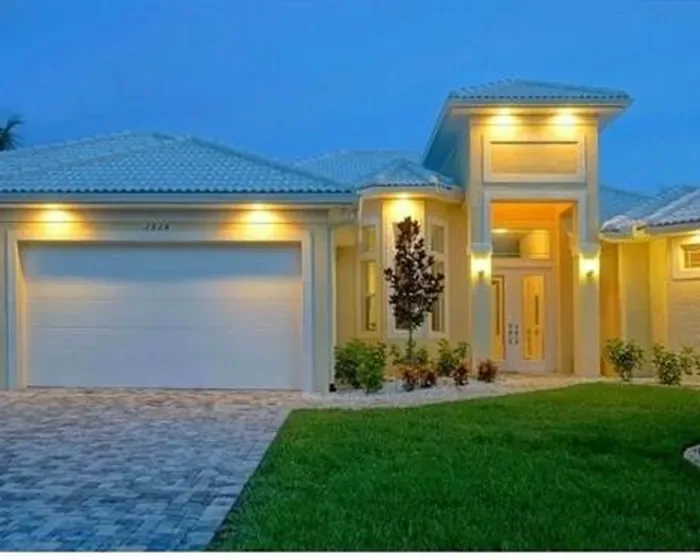
Getting Started
The basics for anyone buying their first home — or their first home in Southwest Florida — from pre-qualification to what makes a condo purchase different.
Getting pre-qualified with a lender before you start touring homes. It gives you a realistic budget and shows sellers you're a serious buyer, and it often changes what kind of property makes sense to look at.
No. Many loan programs allow considerably less — conventional loans can go as low as 3-5% down for qualified buyers, FHA loans typically require around 3.5%, and VA loans can require no down payment at all for eligible veterans. Talk to a lender about what you actually qualify for.
Yes. Southwest Florida has a large veteran and military community, and VA loans — with no down payment and no private mortgage insurance — are commonly used here. Not every property or condo association is VA-approved, so it's worth confirming eligibility before settling on a specific listing.
A financed purchase typically falls somewhere in the 30-45 day range from a signed contract to closing, depending on the lender, the inspection and appraisal timeline, and whether anything unexpected comes up. Cash purchases can close considerably faster.
A condo purchase adds the HOA into the equation — its financial health, reserve funding, rules, and any pending special assessments matter as much as the unit itself. See the Condos & HOAs section below for more detail.
Condos & HOAs
What to look at beyond the unit itself — the association's finances, reserves, insurance, and Florida's newer structural-inspection requirements.
The HOA's budget, reserve fund balance, any pending or recent special assessments, and the master insurance policy. A condo can look perfect and still come with a financial surprise if the association's reserves are underfunded.
A one-time fee charged to all unit owners to cover a cost the HOA's regular budget and reserves don't cover — often a major repair, a required structural project, or an insurance shortfall. They can range from a few hundred dollars to tens of thousands depending on the project.
Following changes in Florida condo law, many condo buildings are now required to complete milestone structural inspections and a Structural Integrity Reserve Study (SIRS) on a regular schedule. These reports can reveal needed repairs and directly affect an association's reserve requirements and fees — worth reviewing before buying into any condo building.
Usually not fully. The HOA's master policy typically covers the building structure and common areas, while owners are generally responsible for their own unit's interior and contents through an individual HO-6 policy. Coverage details vary by association, so it's worth confirming exactly where the line is drawn.
Not always. Some lenders and loan programs — including VA and certain conventional programs — require a condo association to meet specific approval standards before they'll finance a unit in that building. It's worth checking a building's lending-approval status early if financing is part of your plan.
Inspections & Property Condition
What a general home inspection covers, and the Florida-specific inspections that affect insurability.
Yes. A general home inspection is worth doing regardless of the property's age — it can catch installation issues, code problems, or maintenance items that aren't visible on a walkthrough, even in a newer or recently renovated home.
A focused inspection of four systems — roof, electrical, plumbing, and HVAC — that many Florida insurance companies require before issuing or renewing a homeowners policy, particularly on older homes. It's shorter and less expensive than a full home inspection but insurance-specific.
An inspection that documents a home's storm-resistant features — roof shape, roof-to-wall connections, impact windows or shutters, and similar details — that can qualify the property for meaningful discounts on Florida homeowners insurance.
It becomes part of the negotiation — you can ask the seller to repair it, credit you for the cost, adjust the price, or in some cases walk away, depending on how your contract is structured. Not every finding is a deal-breaker; the goal is simply to know what you're buying.
Insurance & Flood Basics
What flood zones actually mean, how flood insurance pricing works, and the basics of homeowners coverage in Southwest Florida.
In almost all cases, yes. Most canal-front Cape Coral property sits in Zone AE, a Special Flood Hazard Area, where flood insurance is required by any federally backed mortgage lender. A standard homeowners policy does not cover flood damage.
Read the full guide →Zone AE covers most of Cape Coral and carries a 1% annual flood chance. Zone VE applies to Gulf-edge parcels exposed to coastal wave action, with stricter building rules and higher premiums. Zone X covers higher interior areas where flood insurance isn't federally required, though it can still flood.
Read the full guide →Cape Coral participates in FEMA's Community Rating System at Class 5, which gives property owners in A, AE, and V flood zones an automatic 25% discount on NFIP premiums, and Zone X properties a 10% discount. No separate application is required, but owners should confirm Community ID 125095 appears on their policy.
Read the full guide →New NFIP flood insurance policies carry a standard 30-day waiting period before coverage takes effect. Waiting until the days before closing to bind a policy can push a closing date back — buyers should start the flood insurance quote and binding process as soon as they're under contract.
Read the full guide →An elevation certificate documents a building's first-floor elevation relative to Base Flood Elevation (BFE). Homes elevated above BFE typically qualify for meaningfully lower premiums — often 20-60% less per foot above BFE — so a missing or outdated certificate can mean overpaying for coverage.
Read the full guide →It runs higher than the national average, largely due to hurricane and flood risk, though cost varies significantly by the home's age, construction, roof condition, and elevation. Wind mitigation features and flood-zone status both have a real effect on premiums.
Wind damage from a hurricane is typically covered under a standard homeowners policy, usually subject to a separate hurricane deductible. Flood damage from storm surge is not covered by a standard policy — that requires separate flood insurance.
Investment Property & 1031 Exchange
Short-term rental registration in Cape Coral, and the basics of deferring capital gains tax with a 1031 exchange.
Yes. As of January 1, 2026, Cape Coral requires annual registration for short-term rentals, vacation rentals, Airbnb and VRBO properties, and most other residential rental types.
Read the full guide →Long-term rentals (more than 6 months) cost $35 per year to register. Short-term rentals (6 months or less) cost $350 per year.
Read the full guide →No. Out-of-state property owners are required to comply with the annual registration program the same as local owners.
Read the full guide →Penalties include a $1,000 fine for the first violation, $2,000 for repeat violations, and additional penalties for ongoing non-compliance. Late renewals can also trigger further code enforcement action.
Read the full guide →A 1031 exchange lets an investor defer capital gains tax on the sale of an investment property by reinvesting the proceeds into another “like-kind” investment property, under specific IRS timing and structuring rules. It applies to investment and business property, not a primary residence.
The IRS requires identifying a replacement property within 45 days of selling the original property, and closing on it within 180 days total. Both deadlines are strict, so a 1031 exchange needs to be planned before the original sale closes, not after.
Yes. The sale proceeds generally need to pass through a qualified intermediary rather than to you directly, or the exchange won't qualify for tax deferral. A 1031 exchange should always involve a qualified intermediary and a CPA or tax attorney alongside your real estate agent.
International & Out-of-State Buyers
Common questions from buyers purchasing from outside the U.S. — including a steady number of buyers from Germany and elsewhere in Europe.
Yes. There's no citizenship or residency requirement to buy real estate in Florida, and international buyers — including a meaningful number from Germany and elsewhere in Europe — purchase here regularly, often for vacation use, rental income, or eventual relocation.
It's more limited than financing for U.S. citizens, but foreign national loan programs do exist, typically with a larger down payment and different documentation requirements. Many international buyers purchase in cash, which also simplifies and speeds up the closing process.
Often, yes. Closings can typically be handled remotely through a power of attorney and electronic or mail-away document signing, coordinated with the title company — worth discussing early with your agent and closing attorney if travel is a constraint.
Property taxes, homeowners or condo insurance, HOA fees if applicable, and property management if you won't be using the home year-round. If you're not a U.S. resident, it's also worth talking to a tax professional about U.S. tax obligations on any rental income or eventual sale.
Selling Your Home
What actually goes into pricing, preparing, and moving a property from listed to closed.
By comparing recent, truly comparable sales — similar location, size, condition, and property type — rather than starting from what an owner hopes to get or what a national estimator tool suggests. Overpricing typically costs more in time on market than it gains in final sale price.
Not everything — some repairs help a sale, and some are a waste of money buyers won't notice or value. The honest answer depends on the specific property and what similar buyers in that price range tend to scrutinize.
It's optional, but it can surface issues early enough to address them on your own terms, rather than having them come up during a buyer's inspection and become a negotiation. It's especially useful on an older home or one that hasn't been recently updated.
Florida law generally requires sellers to disclose known material defects that aren't readily observable to a buyer. This is a legal question with real consequences, so when in doubt, disclose, and talk to a real estate attorney about anything you're unsure of.
It varies by price point, condition, and current market conditions, and can range from a couple of weeks to several months. Pricing accurately from the start is the single biggest factor in how quickly a home sells.
Waterfront & Boating
For buyers considering a canal or Gulf-access property — locks, bridges, seawalls, and what to verify before assuming a dock and lift will work for your boat.
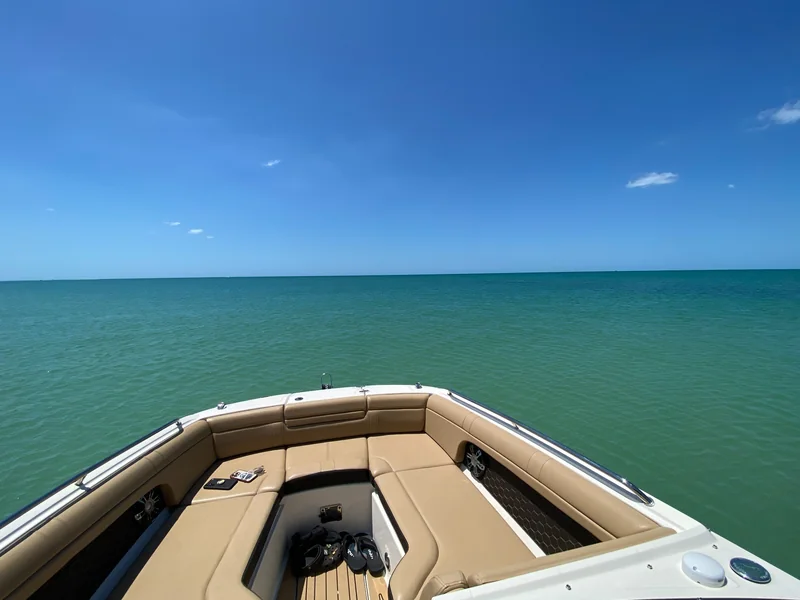
No. The Chiquita Lock was permanently removed in June 2025. It no longer exists as a functioning structure, and boaters no longer need to plan around it.
Read the full guide →Gulf access refers to waterfront homes on canal systems that allow boats to travel to the Gulf of Mexico through the Caloosahatchee River.
Read the full guide →No. Some homes sit on freshwater canals that don't connect to the Gulf at all — waterfront, but not boat-to-Gulf waterfront.
Read the full guide →Sailboat access means there are no bridges between the property and the Gulf — important for taller boats and vessels with fixed vertical height that can't lower to clear a bridge.
Read the full guide →Yes. A property can have Gulf access on paper, but bridge clearance can still limit whether your specific boat can use that route.
Travel time depends on canal location, route complexity, bridges, and idle-speed zones. Some neighborhoods offer meaningfully faster access than others — this is worth comparing property to property, not assuming by area alone.
Read the full guide →You need to compare your boat's total height with the bridge clearance along the route, including a safety margin.
Many do, but not all. Buyers should verify the condition, size, and weight capacity of any existing dock and lift against their own boat.
Read the full guide →Kick-out is when the base of a seawall shifts or slides outward, usually because soil behind the wall has eroded away and hydrostatic pressure has pushed the panel out of position. It's a structural failure, not a cosmetic one.
Read the full guide →As a general range, concrete panel seawalls typically run about $650 to $900 per linear foot, and vinyl sheet pile seawalls about $400 to $650 per linear foot, before accounting for access, permitting, and site-specific factors.
Read the full guide →Yes. Cape Coral requires a Marine Improvement permit for residential seawall repair, including engineering plans signed and sealed by a Florida-licensed engineer, along with state and county approvals before the first inspection.
Read the full guide →Often, yes, though not always. Visible cracking, leaning, gaps between panels, soil erosion at the base, exposed or rust-stained rebar, and standing water pooling behind the wall are all warning signs worth a closer look before buying.
Read the full guide →It's negotiable, like any other repair item, but a seawall in poor condition should factor directly into an offer given the cost involved. Getting a marine engineer's assessment before closing is standard practice, not overcaution.
Read the full guide →Still have questions?
Real estate is rarely one-size-fits-all.
Every property is different, and every buyer has different priorities.
If you do not find the answer you need, we would be happy to help.